There are obviously lots of factors in to what makes a great story, both on the page and on screen. Is your plot interesting? Are your settings and locations easily explored by the reader so they want to dive right into your world? Does your writing splash off the page and keep the reader wanting more? Yes to all of the above? Great! But not so fast.
You could have the best plot in the world, and it won’t make any difference if your characters are boring, have weird motivations or just kind of stink.
Think about your every day life; you’re standing at the water cooler (or in a special ‘water cooler Zoom meeting’), and shooting the breeze with your colleagues and they’re telling you a story. It’s wild, buckle in; there was a car chase, there were explosions, there was a juggler even. Just a heck of a good yarn that kept you on the edge of your seat. It was the most riveting story you have ever heard.

But that story is about Jeremy, the guy from accounting who is about as fun as watching paint dry. Maybe he’s got a hidden inner life with explosions, but you doubt it. Jeremy is kind of flat, and kind of doesn’t seem to be part of the same plot line you’re living in and makes weird decisions.
In your head you have two options; you believe the story and say, “Gosh I guess I didn’t know Jeremey as well as I thought.” Or, more likely, you scoff; “That didn’t happen, obviously Jeremy would never juggle.”
Sorry Jeremy.
A good story can be completely ruined by a poorly written, mismatched or just plain boring character (in this instance boring as in “doesn’t pop off the page/screen” rather than someone who is a boring person… we’ll get to that in a bit).
So what makes a strong character versus a weak character?
One) A strong character makes decisions that make sense for their character.
This is something a lot of writers can mess up, mainly because they are trying to move the plot forward. Character A has to make this plot device happen so character B can activate the plot device inhibitor! It’s especially true with more minor characters; they make weird decisions to drive the plot forward for the protagonist. And sometimes a writer can get away with something like that, but if it leaves the audience annoyed or confused it’s going to bring your whole story down.

One example of this that I come back to is Jonathan Kent in the Snyder Superman films. The adoptive father of Clark Kent, Jonathan sacrifices himself to die in a terrible storm just so Superman doesn’t reveal his true identity as a young man. Maybe it makes sense in some version of the story, but in this one it just seemed off. It is a good motive, but the way it was presented in the story had nothing to do with the stakes of being exposed as a superhero, and more to do with Superman having traumatic past angst. Jonathan Kent is an extremely rational character, so dying versus having there be publicity around his son comes off as weird and forced. If he had died to save his wife, maybe that would have made more sense, but the stakes were just not there.
To expand on rational decisions; one of my weaknesses when writing is creating characters that inadvertently think and react like I would. It’s so difficult for me to make characters make mistakes, or think less rationally, because I know what the ‘right’ decision is and I know how to solve the problem the characters are having. Having a character do something I think is stupid, even if it’s necessary for the plot is hard (which makes the superman thing even more painful; did the writers think it was a weird idea too?). I want my characters to be thoughtful and emotionally intelligent, but having those traits often means there is no conflict between characters.
While writing characters who make decisions you don’t like will never not be difficult (at least for me), it does get easier with practice. Being a writer with empathy makes the process a lot easier. The act of putting yourself in the characters shoes and trying to think like them is how you get over this hurdle.
And it’s hard! You have to boil down the character in your head to their most basic components and then build them back up into a fully fleshed out person. It’s hard! But you have to do it to make your character really come alive.
Two) A strong character is fits in with the story.
Sometimes a character might be well written, but they still don’t fit in. Why is that? It’s possible they’re just in the wrong story, or that they’re being pigeonholed to fulfill a role within the story after the fact.
Usually it isn’t so clear cut as a character belonging in a sci fi story suddenly being plopped down in a film noir, but it can happen. Your character has to live in the world you’re creating, and sometimes it can be hard to make that happen. There ends up being a mushy disconnect between your world, your story, and what the character is living through.
To expand on this, a big problem is trying to force a character to take on a role that is needed for the story, but feels weird when put down on the page. This is directly related to our first topic about the character making decisions for themselves, but is slightly different. Before we were talking about characters making odd decisions for an internal goal in the story, but now we’re talking about characters being written making odd decisions as an external factor. This is extremely fuzzy, I know. Sorry.
An example of this is The Hobbit movies. They’re a fun set of movies, and have a lot going on! The characterization of the dwarves is a big part of this kind of writing; each of the dwarves needed a very distinct personality. Some of these distinct personalities worked really well, some of them fell flat.
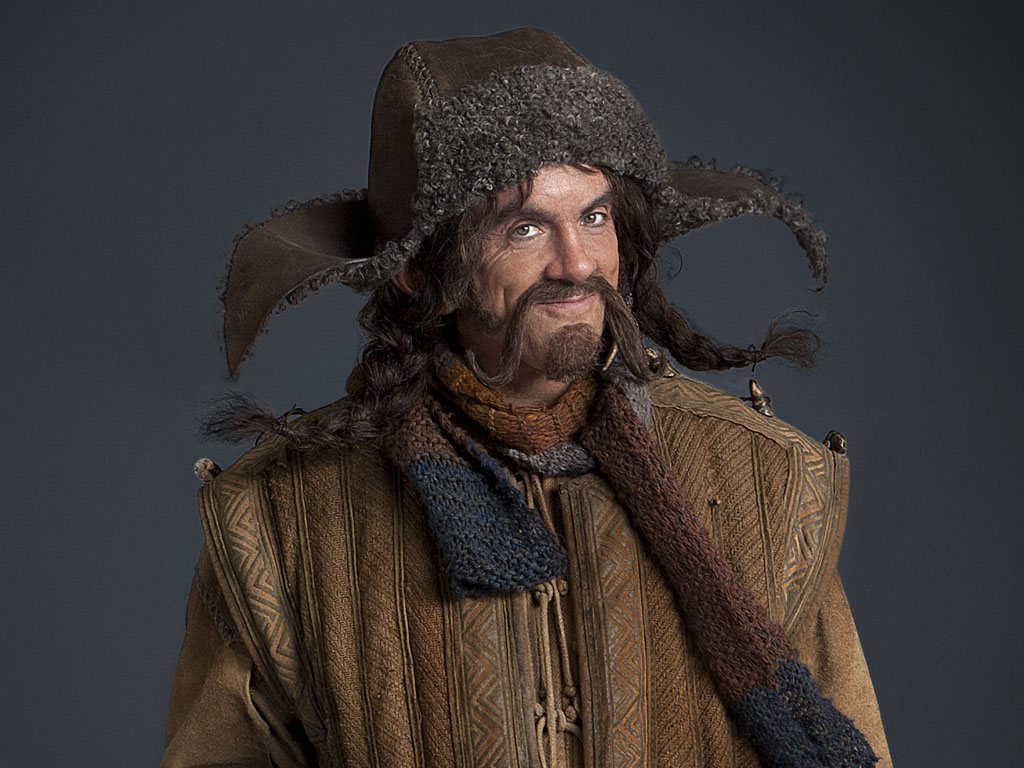
Bofur is my main complaint; I just didn’t like him because it felt like he was in a different movie than the rest of the dwarves (ie: he doesn’t match the story). Bofur was an affable, avuncular guy with loads of empathy, and that just doesn’t vibe with the rest of the dwarves. It’s possible a dwarf could be like that, but it never felt like it clicked into the story for me. But he had to be there because there had to be someone to be friendly to Bilbo. Maybe it was the way the actor portrayed it, or just the situations where the writers chose to bring it out, but it consistently pulled me out of the movie. He doesn’t feel like part of the story, he feels like a solution to a problem.
Writing a strong character means you have to walk a very fine line between having characters be solutions while also having them be fully fleshed out characters. If they are there to be a solution, the viewer or reader cannot know that.
Three) A strong character can’t be ‘boring’.
Sometimes a character isn’t strong because there just isn’t enough of them there. As a reader or film-watcher, we have to have some sort of way to connect with the character If there isn’t anything of substance in the character that’s a big problem that is going to dampen that character, and maybe your whole story. This feels like common sense, but you would be surprised how many shallow, incomplete characters make it to the big screen. And it’s not even necessary the character, just how the character is written.
Steve Rogers in “The Avengers” is kinda boring. There was a lot to work with with his character, considering that literally just weeks before the events of The Avengers he was frozen and revived and thrust seventy years in the future. It’s maddening that he ends up being reduced to a Captain America shell, not Steve Rogers; a little bit of his personality shows up in places, but overall it’s bland.
Steve Rogers in “Captain America: The Winter Soldier” is exceptionally interesting. He has all the same backstory as in “The Avengers,” but in Winter Soldier, he comes off as a sophisticated tactician and fighter, and a young man adapting to a new world and mourning the loss of his old life.

Why is there such a major disconnect between the same character?
Because they were written differently, obviously. The two movies have very different feels, and the ultimately the reasoning behind his characterization in one film just didn’t apply to another. The Avengers is a massive ensemble movie; theoretically there was no time to establish Steve Rogers as anything but Captain America with very little personality (fanfic and deleted scenes beg to differ, but that’s a complaint for another time). But since CAWS was all about Steve Rogers and focused entirely on him, there was room to explore that character in a much more meaningful way. It’s a very clear cut way that shows that a character can be made strong or weak just by writing alone; it’s the same character, but Avengers Steve Rogers doesn’t jump off the page like Winter Soldier Steve Rogers.
In the second CA movie, the writers really nailed down Steve’s characterization and wrote and rewrote it to make it work seamlessly within the story. It takes a lot of work and research and trial and error to get to that point of understanding a character. I almost think of the two Steve’s as a rough draft in The Avengers and then a revised polished draft in The Winter Soldier. If that much change can happen in one movie, just think how much can happen when you rewrite your characters
Caveat: Boring characters who are meant to be boring.

There is an exception to the “don’t make characters boring” rule; sometimes characters are supposed to be boring. But they are boring within the story, and not boring on the page. There is a concept of the Hero’s journey where an ordinary person is thrust into the extraordinary. Sometimes a person is just boring, and then the interesting thing is to see how they react to the unboring world they’ve entered. An example I love comes from Stranger than Fiction, where a very particular, ordinary man realizes his life is being narrated by a famous writer. His very nature is to be boring and precise, which is perfectly juxtaposed by his increasingly weird life as the narrator is taking control. The boring-ness is what makes him an interesting, lovable character (wow, isn’t that weird!).
When I was in the UCLA Professional Program, I had the opportunity to hear Phyllis Nagee, the screenwriter behind “Carol” speak. At the end of her talk, one of the students asked how much you had to know about your character to make them believable on screen. What she said essentially was that you don’t need to know anything about them except what happens to them between your first page and the last page. But you do need to know enough about them to make what happens between those pages make sense.
That’s not extremely helpful, but I loved it nonetheless. There is no easy answer to how much you can flesh out a character, you just have to do it. You ultimately have to meet your characters over and over again until they become real people, just like with the people in your life.
Let’s go back to Jeremy from the intro. You think he’s boring because you have only spoken to him once or twice. But he can juggle, he was in a car chase, there were explosions! Clearly there’s something interesting going on with Jeremy (and many other people in your life probably, though perhaps not to this extreme), but there’s no way to know it until you form a deeper connection with these people. Of course Jeremy seems boring, you only have the rough draft of him in your head.
The End: I have a small etsy store selling silly stickers if you’re interested in that sort of thing.
 Betsy the Gremlin
Leave a comment